

How We Avoid Toddler Screen Time (Without Losing Our Sanity)

As a general rule of thumb, we do not give our kids screen time until the age of 3. This includes tablets, cell phones and anything else like that. Even then, it’s just a few low-stimulating shows on TV- never on an iPad or cell phone.
Recently we went on a trip to North Carolina from Alabama, which is about a 14-15 hour car ride one way. One of my main concerns was how we would manage to keep our 2 year old entertained throughout the drive without giving her an iPad. I am super proud to say that we never had to resort to any type of screen time during our trip- here’s how we did it and why we did it!
*Disclaimer: this is not medical advice. There are affiliate links throughout this post, please refer to our terms of use disclaimer here.
Why We Don’t Use Screens for our Kids
Mental Health Impacts of Screen Time for Kids
Right before my toddler was born, I was a counselor for the university where I was getting my Master’s degree in Clinical Mental Health Counseling. Throughout that year, I spent over 800 hours counseling college students (ages 17-30). One of the biggest trends I noticed in my younger clients (specifically aged 17-23 years old) was the influence social media was playing in their everyday lives.
“According to a 2019 Canadian study, kids who were exposed to more than 2 hours of daily screen time by the age of 5 were almost 8 times more likely to meet the criteria for ADD/ADHD than those who spent less than 30 minutes a day looking at a screen.” -brainMD Blog Post
Brain Development Impacts of Screen Time for Kids
There is now astounding evidence that use of screens is impacting the development of many parts of our children’s brains. I believe this is because of two reasons:
1) staring at blue light for extensive amounts of time and
2) consuming material that is not educational/stimulating to the brain in general.
A study by John Hutton at Cincinnati Children’s Hospital found that high screen time in young children (ages 3–5) may actually change brain structure.
Using MRI scans, researchers saw thinner cortexes in kids with more screen time—areas linked to language, reading, and social skills. Other research has also connected this type of brain change to increased depression symptoms.
In short: the effects of screen time on the brain may start earlier—and matter more—than we think.
Other Astonishing Impacts
Decreased emotional stability (think of temper tantrums)
Difficulty making friends/socializing (think social anxiety)
Poor attention span
Hyperactivity
Lower scores on tests (specifically thinking and language tests)
More likely to get inadequate sleep
Poor achievement of:
Motor skills
Problem solving skills
Social skills
***Info from Integrated Learning Strategies and brainMD by Dr. Daniel Amen
All of these reasons are the exact reason I have not had our toddler ever use a screen.
How we survive going out to eat- coloring.
Screen Free Activities for Toddlers We Use
I will be up front with you- it is not always easy or convenient to not give our toddler a screen. We still go out to eat and drive in the car for long periods of time, though. I think we are able to do these types of things because we have never given her a screen. That makes it a lot easier because she never expects to see a screen. This, in turn, has allowed her to figure out how to entertain herself and how to deal with being bored. It is amazing to me how difficult it is for people to be bored these days.
“Boredom is the space in which creativity and imagination happen,” - Pediatrician Michael Rich, M.D.

Screen Time Free Activities for Kids we Use
Yoto Player
We got this for Libby (toddler) for Christmas and she has been LOVING it! The cards save in the Yoto app, so if you lose the card- you can still use it (better than Tonies from what I hear). You can also control the player from the app (volume, changing the story, etc). It’s also low EMF if you care about that, too!
Stickers
I will often give Libby a sheet of paper and a sheet of stickers and let her put them literally wherever she wants. It’s relatively easy clean up and it is educational because I will ask her what color they are or what the sticker is. She loves getting the questions correct and I think this improves her self confidence. I like these sticker books, too!
Camp Snap Camera
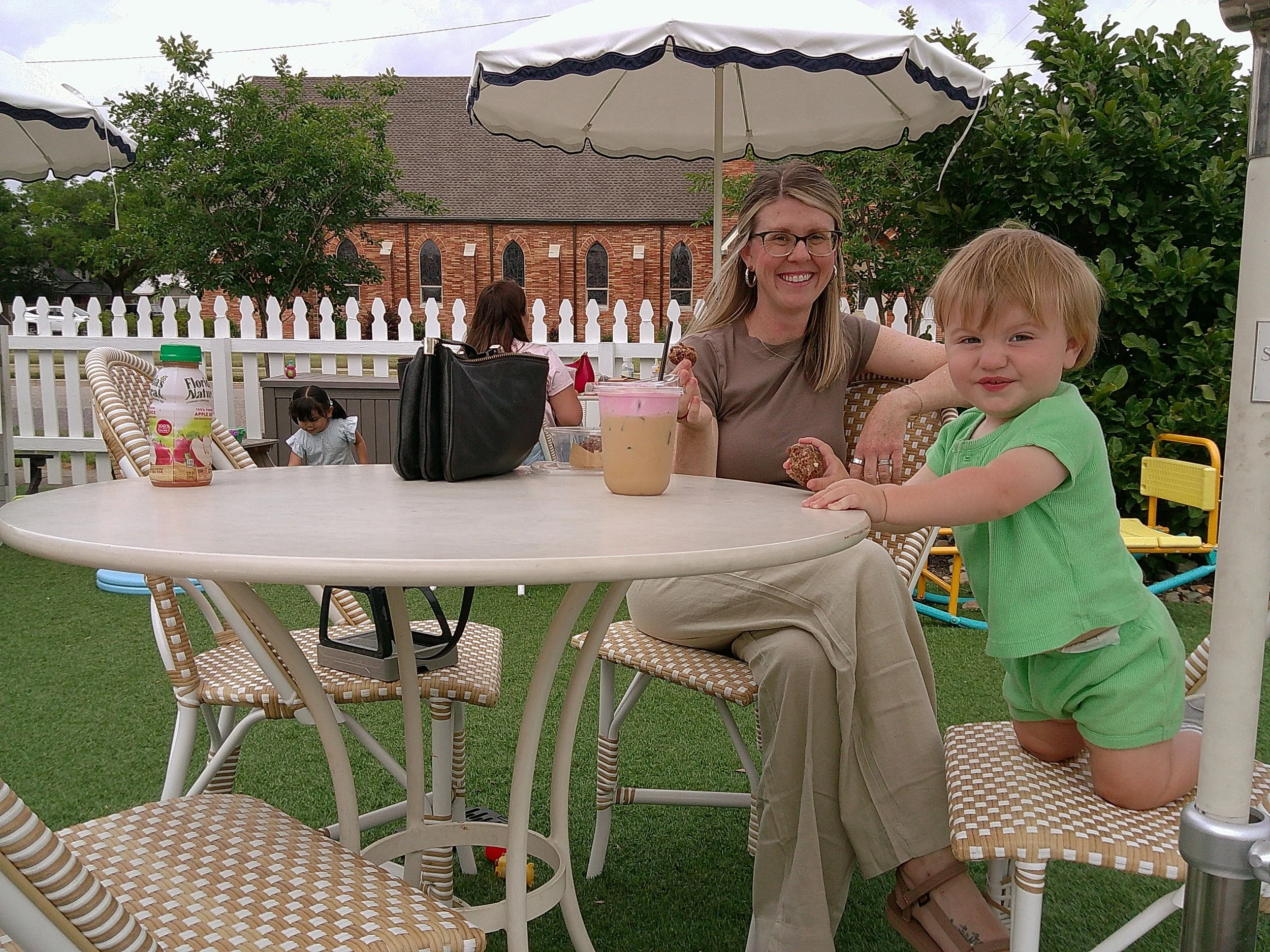
This is a screen free digital camera that gives “disposable camera” vibes in the fact that you don’t know what pictures are on it until you upload them to your computer. It’s SO fun to see what pictures Libby has taken and to see things through her view point.
Libby took this picture of us at the coffee shop <3
Coloring
Libby loves to color but it doesn’t hold her attention long. However, I still buy things to color with (other than markers- I am not a fool). We mostly use beeswax crayons, twistable crayons, chalk for outside, a cheap coloring book (Libby doesn't care what characters because she honestly doesn't know any since she doesn't watch shows much), and her doodle board.
Blocks/Magnets
Libby recently has gotten really into building with her foam blocks and magnet tiles. It will occupy her for at least 30 minutes to an hour at night. It typically entertains her longer when we participate with her. Disclaimer: if you hate messes then I would not purchase these. They're honestly the bane of my existence. I find these blocks everywhere lol
Chores
Libby loves to help around the house. She will “help” me fold clothes, wash dishes, prepare dinner (we bought her this "knife" set), clean the floors. A helpful item we got for her was a tower to stand in so that she is the height of our counter. Also, we do not use any toxic cleaning products- you can read about what we use here.
Playing Outside
We live in Alabama. Let me tell you, it is hot as hell. However, we take Libby outside daily to run in the yard or swing on her swing set. The heat doesn’t bother us and she would stay outside all day if she could. I just make sure she’s well hydrated with water while we are outside. I also make sure she has nontoxic bug spray on as much as possible.
How We Traveled without Screen Time
Now that you know what we use at home, you might be wondering how we managed to avoid using screen time while in the car for such a long period of time. We had to be strategic about our trip. Instead of driving the entire 14 hours, we broke it up into 2 days. One day we traveled 7 hours and the next day we drove the remainder of the way.
We planned when we’d leave around her usual nap and sleep schedule. Libby will sleep in the car very easily and she really likes her car seat in general (I realize this is not a luxury most experience- I attribute this to chiropractic care and you can read why here). We left a little after lunch time because that is typically when Libby naps. We drove about 3 hours to a town along the way. Libby woke up around this time and we had dinner and let her play/run around outside for about 2 hours total. We drove the rest of the 4-5 hours while she slept at night. The next day we woke up at 4 AM and started our travels. She again slept until about 8 AM and we stopped for breakfast/let her play for about 2 hours. We drove the rest of the way after that and arrived at our destination after lunch time.
Like I said, we had to be strategic about timing. We also had to splurge on a hotel expense when we normally wouldn’t have. It was worth it to me. When Libby was awake in the car, she entertained herself with stickers and coloring or having snacks (read what snacks I recommend here). Libby has a pretty good temperament. She really doesn’t throw a fit or hardly cry. I attribute this to how we feed her and interact with her in general, so I highly recommend reading my post about ingredients we do not feed her and snack alternatives that are delicious and actually nutrient dense.
Other Resources
You can learn a lot about brain development from Dr. Daniel Amen’s Instagram (@doc_amen). He also wrote a book about raising children called Raising Mentally Strong Kids.
This article I read on his blog is great to check out if you’re curious how much screen time is recommended for certain ages and alternatives to use instead of screen time.